
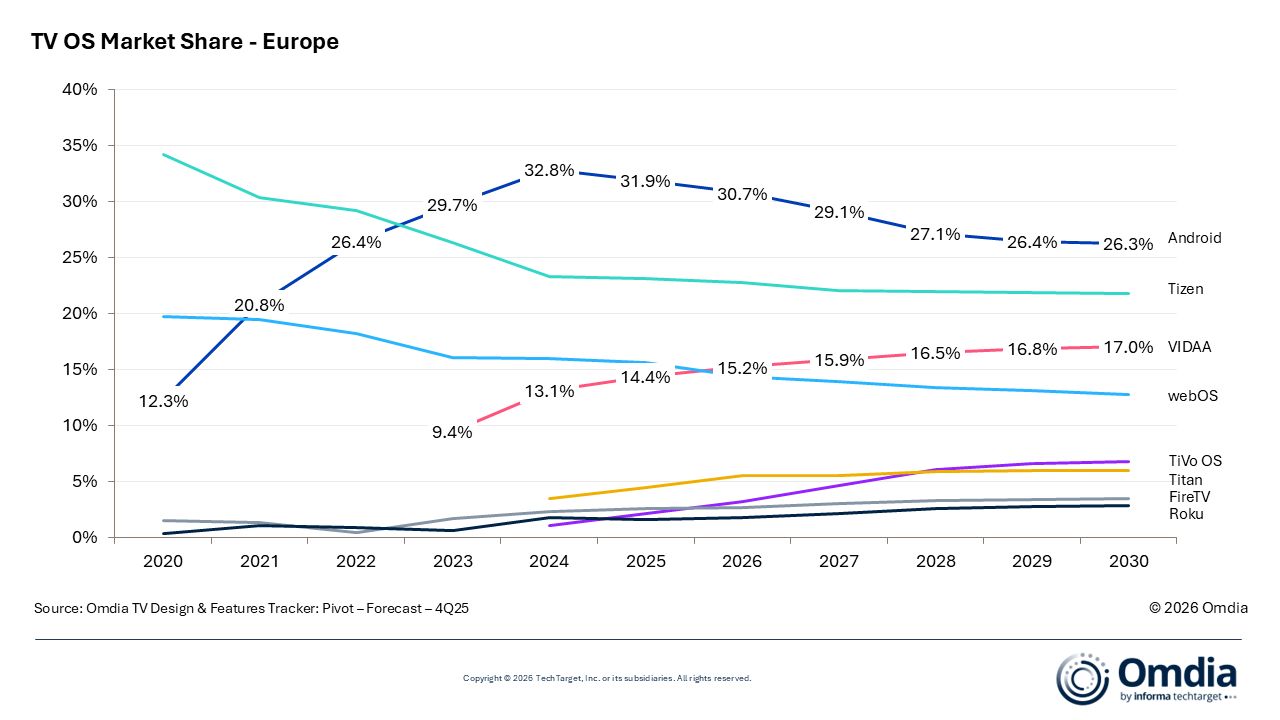
Google TV holds a 32% share of the European TV OS market, according to Omdia. A marketing agency recently asked a reasonable question off the back of that figure: if Google is the number-one TV platform in Europe, why can’t an advertiser simply buy 32% of European TV home screens?
The answer is that OS market share and the home-screen inventory available to a specific advertising campaign are not the same thing.
32% TV OS/platform share ≠ 32% of European TV home screens purchasable through DV360
Omdia’s 32% figure measures Google TV’s share of the European TV operating-system market. It reflects the scale Google TV has achieved across televisions and devices in Europe, but it is not a measurement of the advertising inventory available to a campaign.
Google does offer a home-screen advertising product: the Google TV Masthead. Masthead ads can appear on eligible Google TV devices, including televisions manufactured by Google TV partners. However, Google’s publicly available documentation does not establish that every television represented within the 32% market-share figure is available through the Masthead product in every country or campaign.
For media buyers, OS penetration and campaign-addressable reach therefore need to be assessed separately.
Samsung manufactures its televisions and operates Tizen, its own TV operating system, on its hardware. LG has a similar model with its televisions and webOS. Each company controls both the device and the platform, making its home screen a clearly defined advertising environment.
That vertical integration also allows Samsung and LG home-screen campaigns to be accessed through direct platform relationships. As a content partner on both platforms, Insight TV has access to home-screen inventory on Samsung and LG. Agencies can therefore place brand campaigns alongside relevant content through Insight TV’s platform relationships rather than relying on an open-auction purchase.
Google takes a different approach. Google TV is a software platform licensed to television manufacturers. Sony, TCL, Philips and Xiaomi are among the brands that have sold Google TV models.
Google TV Masthead ads can appear on eligible televisions made by these partner manufacturers. The fact that Google does not manufacture most of the televisions itself does not prevent it from serving advertising through the Google TV interface.
The important distinction is that the scale represented by Google TV’s 32% European OS share is distributed across different manufacturers, device models, countries and configurations. Google’s overall OS share should therefore not automatically be treated as the number of devices or impressions available through a specific advertising campaign.
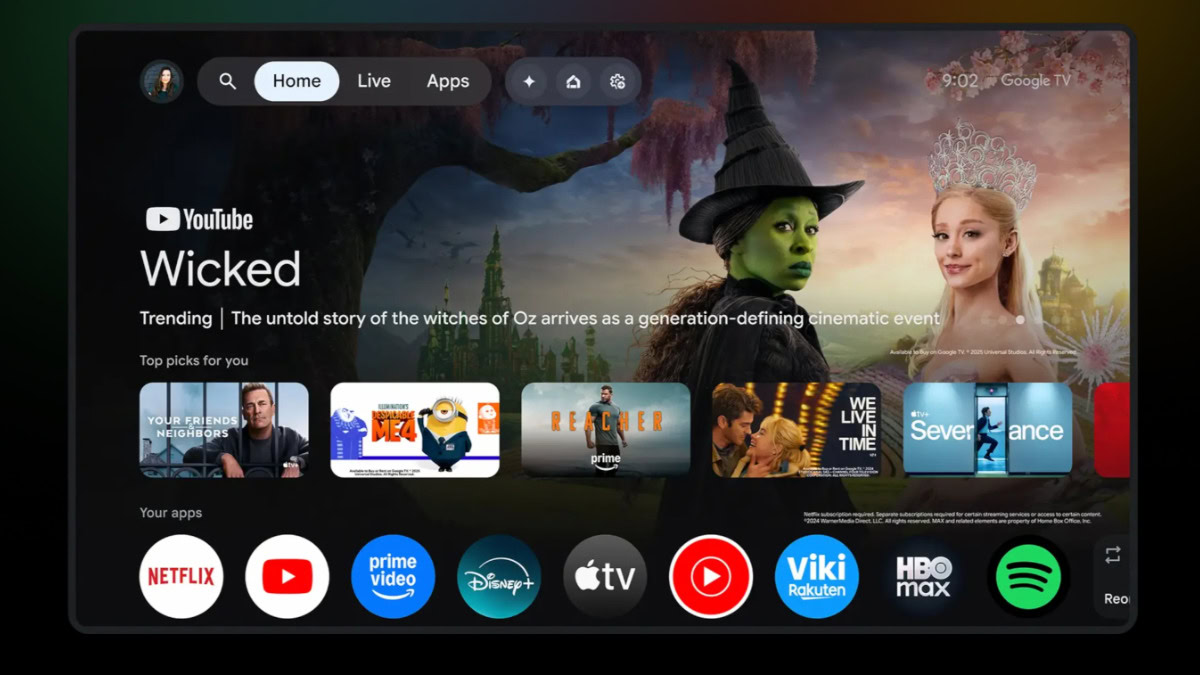
Google TV home-screen advertising can be bought. The product is called the Google TV Masthead, a premium placement in the first position of the Featured carousel on the Google TV “For You” home screen—the interface viewers see before opening an app.
The placement can appear on eligible devices running the Google TV interface, including compatible televisions made by Google’s manufacturing partners.
Google documents buying routes through its advertising stack, including Display & Video 360 via YouTube Programmatic Guaranteed instant deals, subject to availability and market eligibility.
The Masthead is available across a number of European markets, including the UK, Netherlands, Germany, Spain, Sweden and Switzerland, among others. Country availability can change, so Google’s live support pages should be checked when a campaign goes into planning.
When planning a Google TV home-screen campaign, agencies should ask how many eligible Google TV home screens a specific buy can reach in each target market and how that reach will be verified.
That figure should come from Google’s campaign-planning and buying process rather than from its overall OS market share.
The same principle applies across Smart TV platforms. OS market share provides useful context about the scale of a platform, but campaign planning should be based on the eligible inventory, targeting options and verified reach available through the specific buying route.
This is not only a Google TV question. The TV home screen—the interface viewers see before selecting a broadcaster, FAST channel or streaming app—is becoming an advertising channel in its own right.
According to Omdia, emerging platforms including VIDAA, Titan OS and TiVo are forecast to capture a growing share of the European TV OS market by 2030. The Smart TV landscape is therefore likely to become more fragmented.
For agencies assessing home-screen opportunities, the key considerations are who controls the placement, how the inventory is accessed, what audience and targeting options are available, and what verified reach a campaign can deliver in each market.
OS market share provides useful context, but it does not replace campaign-level information about available inventory and reach.
.jpg)
As a content partner on Samsung and LG, Insight TV gives agencies direct access to home-screen inventory on both platforms through its established platform relationships.
This enables brands to appear alongside relevant content across two of Europe’s leading Smart TV environments.
You can also read more about how Samsung opened its home screen to programmatic buying and what that means for agencies.





_Fullbleed.jpg)
.svg)