
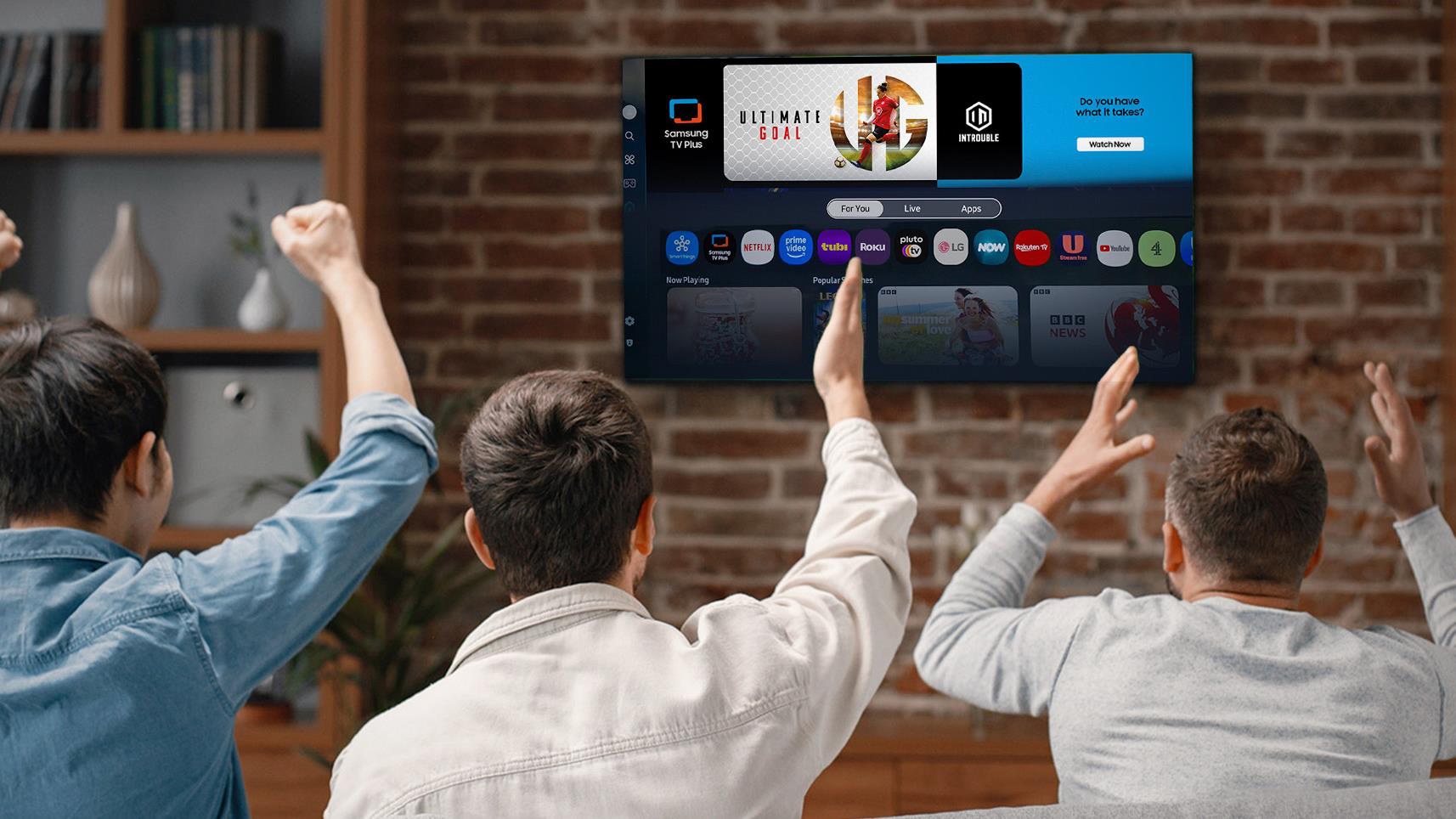
Sport clubs sit on hours of footage: match replays, player stories, training ground access, archive classics that most fans never see. A FAST channel changes that. It turns a club's existing content library into a 24/7 destination on the same platforms where tens of millions of people watch free TV every day.
Streaming now accounts for 49% of all TV viewing. Among sports fans, the shift is accelerating: GWI data shows 23% already stream games online each week, closing fast on the 27% still watching via traditional TV. For 16-to-24-year-old fans in Europe, the share watching highlights and recaps online weekly has grown by 22% since Q2 2024.
Sports content has also become the dominant force in advertising-supported TV. Nielsen reported that sports accounted for 29.2% of all ad-supported viewing among adults aged 25-54 in Q4 2025, making it the most commercially valuable content category on television. Clubs own a significant share of that inventory.
The biggest free streaming platforms are now a primary viewing destination on connected TVs. Samsung TV Plus, LG Channels, Roku, Tubi, and Pluto TV all carry ad-supported channels into millions of living rooms every day. eMarketer forecasts FAST users in the US will reach 131.4 million in 2026, representing 54% of all connected TV users. PwC projects that over 90 million US viewers will stream a sports event at least once a month by 2025, up from 57 million in 2021.
The clubs that recognised this early are already there. Real Madrid TV, Barca TV, MUTV, LFCTV, City+, and FC Bayern TV all have a presence on major smart TV platforms, on the living room screen alongside the rest of television, not buried in a club app.
A club FAST channel is a scheduled, always-on linear stream that lives inside these platforms. Viewers tune in the way they would tune into any TV channel. The club programmes the schedule: classic matches in the morning, training content mid-afternoon, match replays in the evening.
Revenue comes from ad breaks in the stream rather than subscriptions, and the club retains full control of the schedule, the brand, and the audience relationship, without needing to build subscription infrastructure.
The content is rarely the problem. Most clubs have more footage than they can programme. The challenge is infrastructure: building a broadcast schedule daily, securing carriage across the right platforms and markets, managing ad inventory, and reading performance data.
These are broadcast operations tasks, not media rights or content tasks. Encoding, playout, EPG management, and platform compliance sit outside a typical media team's remit.
It is the most common concern clubs raise, and the short answer is no. FAST and a club's existing content channels serve different viewing contexts and different audiences.
The key is content windowing. Premium footage, live games, first-run documentaries, and exclusive interviews, belongs in its primary window first. FAST works best with evergreen and archive content: classic match replays, behind-the-scenes access, magazine-format series. This is content that has already had its premium run and would otherwise sit unused in a library.
Viewers discovering a club through a FAST channel are not the same audience actively seeking that club's content elsewhere. FAST operates as a discovery layer, reaching fans in a lean-back browsing environment who would not have found the club through a dedicated app or broadcast deal. Rather than drawing audiences away from existing channels, it brings new ones in.
Clubs already running FAST channels alongside other content platforms bear this out. Content made available on FAST has not undermined performance elsewhere; in most cases it has extended reach into markets and demographics the club was not previously serving.
A FAST channel is additive reach, not a competing product.
Insight TV has been building and operating FAST channels as one of the first broadcasters to launch on Samsung TV Plus. Today our channels reach around 50 million viewers a month across 150+ platforms. We work with clubs and content owners across content strategy, scheduling, playout, distribution, monetisation, and reporting, so a channel can go from concept to live without building that infrastructure in-house.
Sports content now accounts for nearly 30% of all advertising-supported TV viewing. The audience is already there. The question for clubs is where they want to be found.





.svg)